
Kearny Previous Residents by Record Era
Each era of a Kearny address has its own sources. The Register keeps the core paper. Hudson County's Register is the formal custodian for deeds, mortgages, liens, easements, maps, discharges, and other recorded instruments. Kearny Library's digitized directory archive opens with its 1890 run and adds selected later editions. For older territory, the State Archives supplies land, vital, census, probate, and naturalization routes. Acclaim publishes no official online start date. Kearny offers no public permit-history portal. Those gaps matter. They decide when a counter visit, an index book, an archive finding aid, or an OPRA request becomes necessary.
| Address-history source | Years it covers | Where held | What it can show |
|---|---|---|---|
| Hudson recorded-instrument index | Online cutoff not stated | Hudson County Register and Acclaim | Recorded parties, legal descriptions, and instrument references |
| Kearny Library directories | 1890, 1895, 1913, 1915, 1917, 1920, 1924, 1927-1929 | Kearny Public Library archive | Published street, name, and place context for each run |
| NARA Hudson County directories | 1923, 1925-26, 1928, 1931, 1933, 1935 | National Archives directory microfilm description | A bridge between located library runs and other sources |
| Sanborn maps | 1907 and an identified 1950 volume | Library of Congress | Historic street and building context |
| Permit and code files | Public online history not located | Kearny code office or custodian request | Work, permit holder, inspections, and dates if releasable |
| State Archives collections | Land c.1650-1996; other series vary | New Jersey State Archives | Older land, probate, census, vital, and naturalization research |
Recent Kearny work starts with the parcel and the Register. An older address adds a library street guide and a map sheet. The State Archives route opens up too. A missing online image proves nothing. The instrument may still sit in the county's hard-copy indexes.
Kearny Previous Residents Start with a Parcel
A street number can change over the decades. A municipal tax-map key gives the address trail a firmer footing. The Kearny Assessor maintains tax maps, property record cards, new-owner records, subdivision information, inspection and new-construction material, and assessment changes tied to demolition or fire. Its public page offers no owner-search form. Use the Kearny Tax Assessor to ask for the current office route, a releasable property card, or the precise record you need.
The NJGIS Property Explorer searches by address, county, municipality, block, or lot. A PAMS identifier strings together county, municipality, block, lot, and qualification parts. Owners may be redacted under Daniel's Law. A map click still pinpoints the parcel. Save the map layer you used. A parcel at a county edge deserves a second look, since state parcel edges may not be edge-matched.
Keep four things distinct: the current block and lot, the situs address, the mailing address, and any historic printed address. An assessed owner is not a dated directory entry. A recorded party is not automatically an occupant.
Trace Kearny Previous Residents Through Deeds
The deed chain anchors any Kearny previous residents search. Start from a current parcel key or a known instrument. Then turn to the Hudson County Acclaim Official Records Search. Acclaim covers grantor and grantee names, book and page fields, instrument numbers, a Legal Description route by lot, block, municipality, or address, document type, consideration ranges, and record dates. Record the legal description and instrument reference, not just the display address.
Work backward one conveyance at a time. The seller in one deed becomes the buyer in an earlier record. Keep each party role exactly as printed. Compare the parcel description at every step. Acclaim recommends spelling variants and warns that accuracy is not guaranteed. No earliest online date appears in the official materials. The Register keeps both computerized and hard-copy property indexes, the documented fallback when an older result is missing from the web interface.
- Record the current Kearny address, municipality, block, lot, and any known instrument number.
- Find the most recent matching instrument in Acclaim by Legal Description, address, or recorded party.
- Copy the record date, document type, book/page, instrument number, grantor, grantee, and legal description.
- Search the prior seller as a grantee, then compare the parcel description and reference before moving back again.
- When the web search stops, ask the Hudson County Register about its computerized or hard-copy index, paper books, microfilm, and image retrieval route.
- Grantor
- The party transferring an interest in a recorded instrument.
- Grantee
- The party receiving that interest in the recorded instrument.
- Chain of title
- A linked sequence of recorded instruments for the same land interest.
- Legal description
- The formal lot, block, map, or other land description that helps connect records when an address changes.
Note: Consideration appears as an index field, but it is not a current value and not proof of any person's connection to the address.
Kearny Previous Residents and Acclaim Gaps
An online record is only one access channel. The Register's office sits at 257 Cornelison Avenue, 2nd Floor, Jersey City, with computerized and hard-copy property indexes on hand. Search and cashier service runs Monday through Friday from 9:00 to 2:00, and customer-service phone hours run 8:00 to 3:45. Call (201) 395-4760 or write hudsonregisters@hcnj.us. Confirm current details before visiting or requesting a copy.
Acclaim support is the official starting point whenever a browser, login condition, cookies, field behavior, or result access needs clarification.
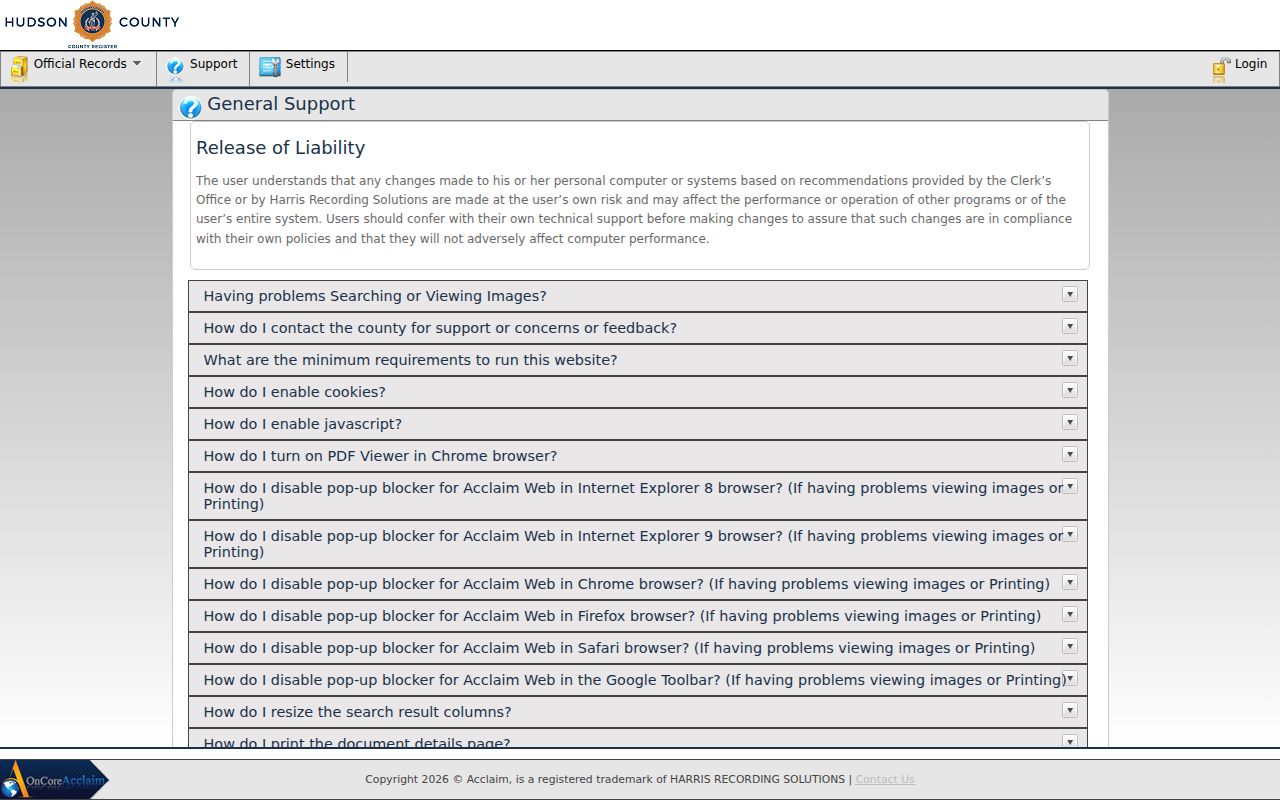
The support route cannot recover a missing historic record by itself. It does help separate a portal-access problem from the Register's documented index and counter alternatives.
Kearny Previous Residents and Former Numbers
An old address is a puzzle, not a straight line. Kearny Code Chapter 14 provides an application for a corrected house number, yet the town publishes no public list of historic renumbering or any formal readdressing project. That matters. A missing directory entry alone never proves a number changed. Keep every detail in one note: the former number, the current number, the street suffix, the place label exactly as printed, the block and lot, and the deed legal description.
Place labels shift as well. Hudson County was carved from Bergen County in 1840. Kearny Township split from Harrison Township in 1867 and became a town in 1899. So a pre-1840 item may sit under Bergen, while a later record falls under Hudson. Printings can carry Harrison, Kearny, Arlington, East Newark, or another locality tag. Record the wording as it appears. Do not quietly swap in a modern mailing label.
For any Kearny address, the Library archive's Street Guide is the bridge. Check it first. Only then treat an alphabetical directory entry as a match, comparing the historic number against the parcel and the instrument chain.
Kearny Previous Residents on Sanborn Maps
Fire-insurance maps give old Kearny addresses a visual anchor. The 1907 Library of Congress Sanborn atlas for Harrison, East Newark, and Kearny holds 78 sheets and 79 images. A 1950 volume covering Harrison and Kearny also exists. Each sheet can reveal a street name, building footprint, construction material, and story count. Lot context and fire-protection notations appear too.
These maps let you see an address that may since have been renamed, altered, divided, or demolished. Note the exact sheet number and visible intersections. A Sanborn sheet is not a current parcel survey. Nor can it prove who lived at a property. Before folding a sheet into a prior-resident trail, reconcile it with a dated directory entry, a deed legal description, and modern GIS geometry.
Kearny Previous Residents in Directory Years
Kearny Library's digitized archive holds directory runs from 1890, 1895, 1913, 1915, 1917, 1920, 1924, 1927, 1928, and 1929. Coverage shifts from year to year. The 1890 run separates Harrison and Kearny and includes a Street Guide. The 1895 material covers Harrison, Kearny, and Arlington. From 1913 through 1920, the runs cover Harrison, Kearny, East Newark, and Arlington. The 1924 through 1929 runs add North Arlington. Shared publication scope never merges the municipal boundaries.
Start with the Street Guide. Then work through the year's alphabetical section, business pages, advertisements, appendices, and closing pages. Record the exact section and printed page. No single entry format holds across all years. Preserve only fields actually visible in the scan, such as a name spelling, initials, address, household notation, business role, abbreviation key, or place label. Guessed text only corrupts the trail.
Pair each directory year with its nearest census year. Never force an exact date match. Compare one dated occurrence at a time, and use the record role accurately, since a directory listing and a census enumeration carry different evidentiary weight. The historical volumes get fuller treatment in the Kearny city directories collection.
Address trail: Street Guide and directory year → nearest census year → compare the exact address, name, and source role → repeat with the next located run. Two dated, independent sources agreeing make any match far stronger.
Kearny Previous Residents at the Archives
The New Jersey State Archives anchors the state-level route for older land, probate, census, naturalization, court, and vital material. Its land holdings span 1650 through 1996. Indexes and start dates vary by series. Broad coverage is not a digitization promise. One series may be fully indexed online while its neighbor survives only on paper, so match the catalog, finding aids, copy requests, or an in-person visit to whatever you need.
The Department of State's 2025 annual report describes transfers of paper and microfilm. State Vital Statistics material from 1917 to 1950 moved as well. That can aid later discovery. An item may also need a fresh location check. The gallery reopens July 7, 2026. Holdings reportedly exceed 60,000 cubic feet of paper and 40,000 reels of microfilm. Confirm research-room access and item availability before travel.
The State Archives home page is the official entry point for current research access and collection navigation.
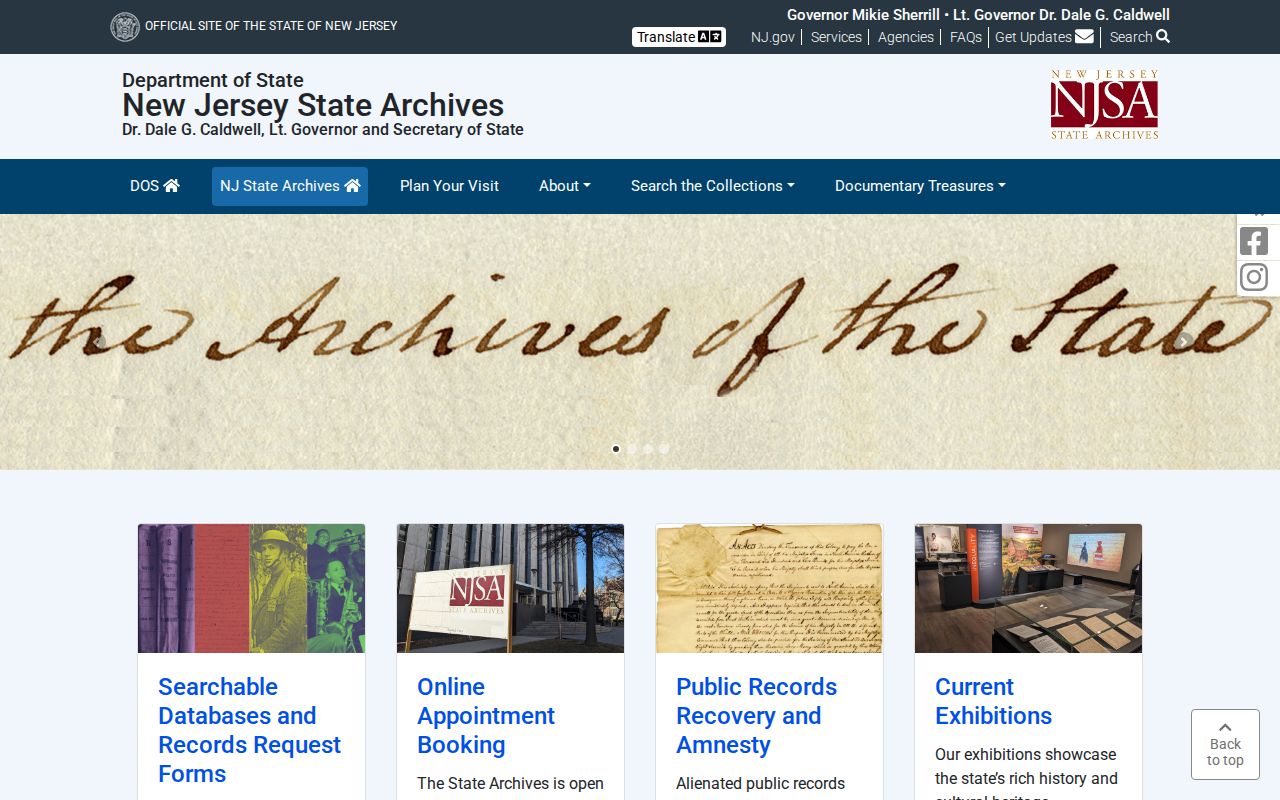
Archive material can push a Kearny address trail beyond what a web index or municipal page captures. Document the series, date, and source role each time.
Kearny Previous Residents and Recording Alerts
Kearny homeowners can watch for suspicious filings. The tool is free, and it comes from the Hudson County Register. The Recording Notification Service tracks up to ten names or properties by email. You can set the watch with a name, address, lot, block, or municipality. Whenever a matching instrument gets recorded, the service sends an alert. It will not reach back to report earlier activity. It also cannot certify title or judge whether a notice you receive is genuine. Treat each alert as a prompt to inspect the official instrument. Do not use it as a substitute for the historic deed chain behind a Kearny property.

A recording that looks fraudulent deserves careful handling. Keep the original notice intact, then verify it through the Register's official contact route before acting on anything it says. The Register also points to the Hudson County Office of Consumer Protection at (201) 795-6250 as a place to take the concern.
Kearny Previous Residents and Household Limits
A past residents search in Kearny works only when a dated source backs it up. A city directory can name a printed occupant or household heading for a given year. A deed can show a recorded party. An assessment property card can show owner information for its era. Even together, these sources cannot trace every person tied to an address. Kearny publishes no official obituary index. Instead, the library's yearbooks, the Gen. Kearny Room, the museum, the historical society, newspaper-history leads, and the State Archives remain the strongest routes. Each one needs its own source-by-source confirmation.
Privacy rules still apply to old records. New Jersey's Address Confidentiality Program and Daniel's Law can shield addresses. OPRA does not override exemptions. Motor-vehicle, vital, court, voter, and protected-address records carry separate limits. Never treat a historic Kearny address as a clue to where a living person resides today.
Lawful personal research. Use Kearny previous-resident records for family history, house history, estate questions, consumer safety, and personal curiosity. Do not use findings to stalk, harass, intimidate, or harm anyone.
Note: A negative result in a Kearny residents directory should name the office, the search terms, and any filters used. That way a later reader can judge the record gap fairly.