
Kearny City Directory Collections
Kearny Public Library maintains the strongest identified local run. Its digitized archive lists separate volumes for 1890, 1895, 1913, 1915, 1917, 1920, 1924, 1927, 1928, and 1929. The archive groups places differently over time, so a search for a Kearny household may also require Harrison, Arlington, East Newark, or North Arlington. The volume label is evidence of its own geography, not proof that those places shared a municipal boundary.
| Collection | Years located | Where held | How to use it |
|---|---|---|---|
| Kearny and Harrison directories | 1890 | Kearny Public Library directory archive | Digitized linked sections, including a Street Guide |
| Harrison, Kearny, and Arlington directory | 1895 | Kearny Public Library directory archive | Read the printed place headings before matching a name |
| Combined local directory runs | 1913, 1915, 1917, 1920 | Kearny Public Library directory archive | Harrison, Kearny, East Newark, and Arlington coverage |
| Expanded combined local runs | 1924, 1927, 1928, 1929 | Kearny Public Library directory archive | Also includes North Arlington in the library listing |
| Hudson County city-directory microfilm | 1923, 1925-26, 1928, 1931, 1933, 1935 | National Archives description | Check the archive arrangement for a gap year |
The library catalog page does not state a publisher for these runs. Read a volume's title page or introductory matter before putting a publisher name in notes. The same restraint applies to the meaning of abbreviations and entry marks. A scan may show a familiar directory convention, but the printed Kearny volume is the source that must confirm it.
Kearny City Directory Year Runs
The known sequence has long gaps. It begins with a digitized 1890 run, moves to 1895, then resumes in 1913 through 1920 at uneven intervals, followed by 1924 and 1927 through 1929. That pattern makes absence from one book weak evidence. A person could have moved between volumes, appeared in a related place section, used initials, or simply fallen outside the compilation date.
- 1867: Kearny Township was created from Harrison Township, so early material can use Harrison terminology.
- 1890: the first located digitized Kearny directory run begins the library sequence.
- 1899: Kearny became a town; retain the original volume's township or town wording in a citation.
- 1913: the archive shows a Street Directory, directory parts, a business directory, and appendices.
- 1924-1929: library coverage expands to include North Arlington in the listed group of places.
Those dates describe located materials, not a complete publication history. No official evidence established a first-ever directory, a final printed directory, or a reason for every missing year. Keep a negative-result log that records the volume, section, spelling searched, and geographic heading.
Note: A city-directory gap is a reason to check the next available volume, not a reason to declare a household absent from Kearny.
Kearny City Directory Scan Sections
The archive's internal navigation is part of the research value. The 1890 run separates advertisements, closing pages, a Harrison section, a Kearny section, and a Street Guide. The 1913 run separates advertisements, introductory contents and index material, a Street Directory, Directory Parts 1 and 2, a business directory, and appendices. Start with the title and geographic scope, then use the Street Guide before assuming an address belongs in an alphabetical portion.
Advertisements can identify an institution or an old business name. The street material can clarify a number or street label. An appendix may explain an abbreviation. A business listing can support a documented business connection, but it does not establish a private residence. Preserve the exact section and printed page when transcribing a finding.
Kearny Library Directory Research
The main Kearny Public Library branch is at 318 Kearny Avenue and lists (201) 998-2666. Its listed regular hours are Monday, Tuesday, and Thursday 10-6, Wednesday 10-8, and Friday 10-4, with Saturday and Sunday closed. The Gen. Kearny Room and Kearny Museum use separately listed hours and may have seasonal limits, so confirm arrangements before visiting.
Ask for the directory shelf, local newspaper microfilm, yearbook catalog, research-database access, and any cataloged obituary resource. The library identifies local-history material in the Gen. Kearny Room, including rare Picturesque Arlington and a historic buildings and homes booklet. Its yearbooks reach into the 1920s, though the exact full year list was not located. These materials can place a school, institution, or street in context without turning a historical reference into a current-person record.
For an address question that extends beyond a printed street listing, use the Kearny address directory for the modern parcel and recorded-document route. The historical volume should still be cited as an occupant or directory reference, rather than as proof of uninterrupted residence.
Reading a Kearny City Directory
No readable Kearny sample entry was captured during the research pass. For that reason, the inventory below is a checklist of fields to transcribe only when they are visibly printed in the chosen scan. It is not a claim that every Kearny city directory includes each field or uses a particular abbreviation. Photograph or note the abbreviation key and heading from the same volume before expanding shorthand.
| Name spelling and initials | Copy exactly, including punctuation or initials, then note the year and page. |
|---|---|
| Household notation | Record a spouse, widow, or other household wording only if the printed entry shows it. |
| Address or street reference | Keep the original number, street label, and the volume's place heading together. |
| Business role or institution | Transcribe only visible wording and do not convert it into a present-day identity claim. |
| Owner or occupancy mark | Copy a visible symbol or wording with its key; do not infer its meaning from another directory. |
| Section and page | Identify alphabetical, street, business, advertisement, appendix, or closing-page context. |
| Abbreviation or mark | Copy the key's wording when one appears; otherwise mark the meaning as unconfirmed. |
- Street Guide
- A volume section arranged around streets or numbers. Kearny's 1890 archive explicitly identifies one.
- Criss-cross directory
- A street- or address-order directory section when a volume provides one. Do not attribute one to Kearny without checking the printed volume.
- Householder index
- A name-oriented finding aid when a volume provides one. Verify its title and coverage in the printed book.
- Abbreviation key
- The volume's explanation of shortened terms or marks. Capture it before interpreting an entry.
Do not assume a criss-cross, reverse, or street-order index exists merely because another city used one. The 1913 archive does identify a Street Directory, which is the supported local route for street-order reading.
Tracing Kearny City Directory Households
Build a simple year-by-year worksheet. One row should represent one appearance of a name or address, with a separate column for the printed municipality. Start with a clearly dated reference rather than trying to force every similar surname into one household. Directory evidence is most useful when it is compared with a census, a recorded document, a map sheet, or an eligible archival record that answers a different question.
- Inspect the title page and place heading for the earliest likely Kearny city directory.
- Search the Street Guide, the name section, and any related place section with the exact spelling and reasonable initial variants.
- Transcribe the page, section, street wording, and any visible notation without filling gaps from another volume.
- Repeat with the next available year, retaining the printed geography even when the group of places changes.
- Pair each directory date with the nearest federal census year, then compare rather than merge their dates.
- Use yearbooks, the library, or archival finding aids for a missing local institution or family context.
A disappearance can mean a move, a name variation, a different place section, a change in listing practice, or a gap between available runs. It does not by itself establish a death, a relationship, or an address after the book's date. A useful citation states the city directory year, printed page, section, and the exact wording seen.
Note: Keep the census date and the directory publication year in separate columns because the two sources may describe different moments.
Kearny City Directory Gaps
For years that the library archive does not list, the New Jersey State Archives genealogical collections are a place to check for related vital, land, census, probate, and naturalization materials. The Archives describes older vital coverage and research access, but an archival collection is not a replacement city directory. Confirm the relevant series, index, copy rule, and current research-room procedure before planning a request.
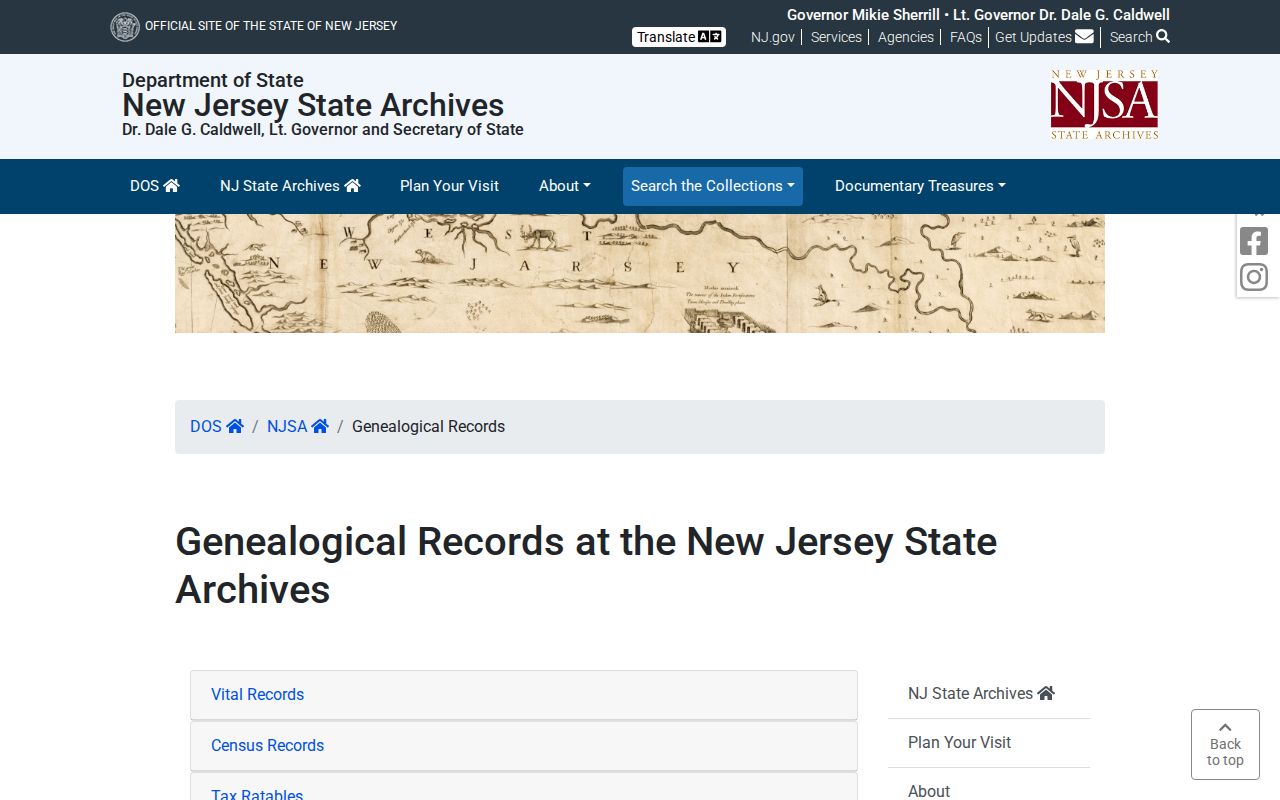
The archive menu helps separate a directory gap from a different record question. A census or probate entry may corroborate a time period, while the Kearny volume remains the source for the wording printed in that directory.
The National Archives city-directory description lists Hudson County microfilm years for 1923, 1925-26, 1928, 1931, 1933, and 1935. Treat that list as a bridge for missing local years. The precise reel, access method, and reading-room arrangement still need confirmation from the archive.
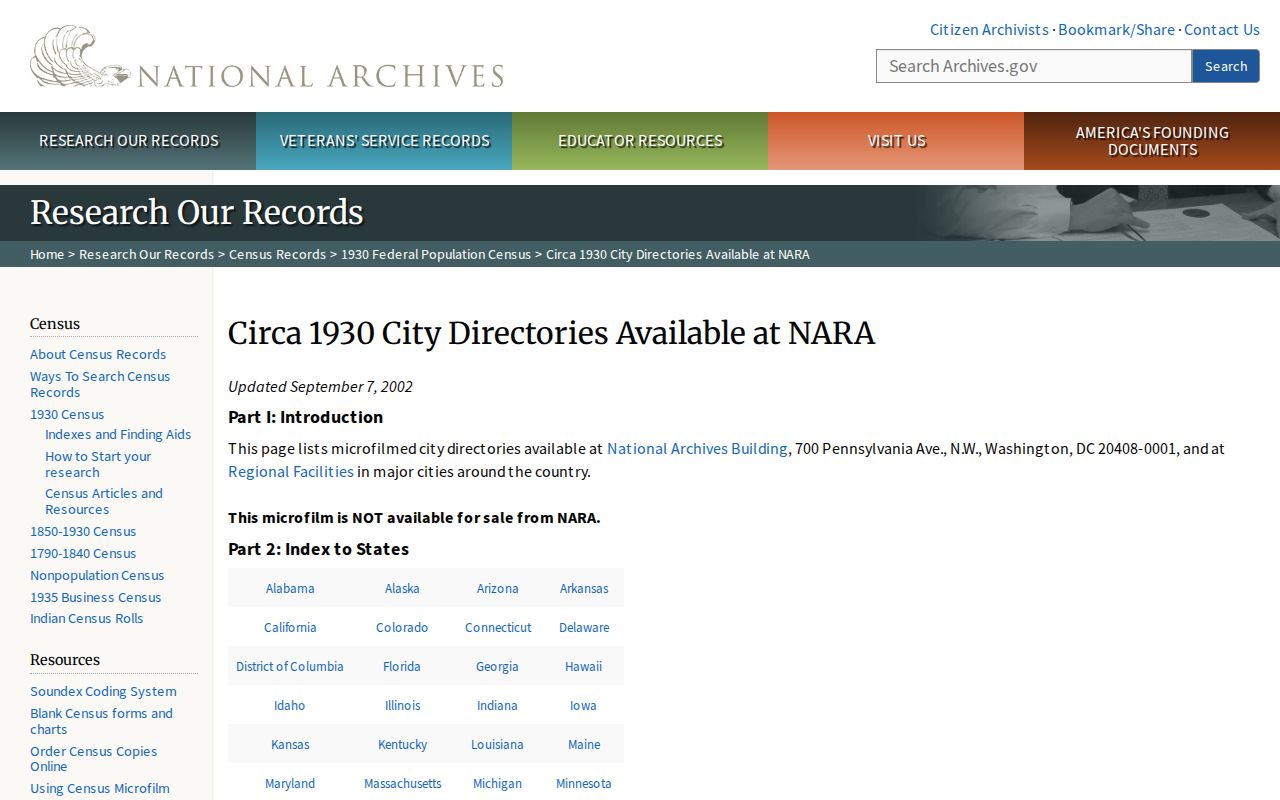
Microfilm availability does not promise a name match or an image online. Record the consulted year and any reel or citation reference so another researcher can repeat the search.
Kearny Historical Society Sources
The Hudson County Genealogical and Historical Society reports photographs, family histories, documents, databases, research tools, newsletters, and research help. Its inspected pages did not provide a complete item-level Kearny inventory or one universal fee schedule. Ask whether a surname, street, congregation, organization, photograph, or document collection is indexed before relying on an unpublished lead.

Society holdings can add photographs or family context to a Kearny city directory citation. They should be documented as their own source, with the collection name and any reference number, rather than folded into the printed directory entry.
Kearny City Directory Cautions
Kearny's historic labels matter. Material near the 1867 transition can use Harrison, while later library volumes can group Kearny with Arlington, East Newark, and North Arlington. Industrial, rail, port, and mill context can also explain why a volume includes institutional or business references beside residential streets. Those circumstances make source labeling more important, not less.
Use only the role that a record actually supports: directory listing, street reference, business reference, map context, or archival index. Never use an old Kearny city directory as proof of a present address, a complete household, or a continuous connection across years. Protected addresses and records with access limits remain outside a historical-directory search.
Note: Cite the volume, page, section, place heading, and access date for every scanned Kearny city directory finding.