
Finding Kearny Resident Records
No single roll lists everyone in Kearny. The records that matter sit with the Town, Hudson County, New Jersey agencies, and local history collections. Each answers a different question. An address is the strongest starting point. It converts cleanly into a parcel, block, lot, and recorded instrument. A name needs a narrower route: voter status, a court party search, a historical directory, or a vital record. Request a vital record when you qualify to do so. Keep every result with its date and role, because a deed party, a directory occupant, a voter entry, and a property-card owner are not the same kind of evidence. In fact, they are different kinds of evidence entirely.
Work from the record closest to your question, then hunt for a second independent match. A current property record may name an owner. It may say nothing about others in the household. A directory entry places a family at an address in one year. It proves nothing about today. Kearny research rewards care. Record exact spellings, sources, dates, and addresses rather than stitching partial matches together.
- Write down the current street address, municipality, and any block or lot already known.
- Use the New Jersey parcel route or ask the Kearny Assessor for the property-card and tax-map record.
- Search the Hudson County Register’s Acclaim index by legal description or by the exact party name.
- For a historical household, check the Kearny Library’s digitized directory runs and their Street Guide.
- When a public index is incomplete, make a focused request to the correct custodian under OPRA or use the counter and archive fallback.
Note: A missing online result may simply mean a redaction, an indexing gap, a different jurisdiction, or a paper-only record.
Kearny Records Offices and Roles
Three offices carry most of the weight in a Kearny residents directory search. The Kearny Assessor keeps tax maps, property record cards, new-owner records, subdivision files, and assessment changes. The Assessor publishes no owner-name search form online. An office inquiry or a narrow records request is the practical fallback. The Hudson County Register preserves recorded land instruments. County election offices run the broader election-record route. The state status tool answers a narrow registration question. None of them substitutes for another.
Hudson County Register
257 Cornelison Avenue, 2nd Floor
Jersey City, NJ
(201) 395-4760
Kearny Tax Assessor
Town assessment administration
Kearny, NJ
Use the Town department directory
Hudson County Election Offices
257 Cornelison Avenue, 4th Floor
Jersey City, NJ
County Clerk: (201) 369-3470
Kearny Parcel Records by Address
For an address-led Kearny residents directory search, keep the municipal parcel and the postal address separate. The New Jersey GIS Property Explorer accepts an address, county, municipality, block, or lot. Its parcel identifier follows the statewide PAMS pattern. Choose Hudson County and Kearny. Then save the block and lot before moving on to land records. Remember what a parcel map is. It is a spatial and assessment aid, not proof that a named person lives there now. Owner data may be redacted under Daniel's Law. Parcel edges along county lines may not join cleanly.
| Parcel field | Use in Kearny research |
|---|---|
| Address | Find the mapped parcel; preserve the source spelling and street suffix. |
| County and municipality | Select Hudson and Kearny to reduce similarly named places. |
| Block and lot | Carry this stable key to the Assessor and Register. |
| PAMS identifier | Connect state parcel data to the municipal tax-lot context. |
The Assessor maintains the property cards, tax maps, ownership updates, subdivisions, and assessment changes, but it publishes no public Kearny owner-search form. Ask for the exact card, map sheet, or assessment period rather than assuming the map shows every field.
Kearny Deed Index Search Routes
Hudson County's Acclaim index is the formal instrument route for Kearny deeds. It splits searches by grantor or grantee. You can also search by book and page, instrument number, legal description, document type, consideration range, and record date. When you hold a parcel key, lead with the legal-description fields. A name search can follow. It should include initials, punctuation, married names, and other spelling variants. The Register reports that both computerized and hard-copy property indexes exist. That matters, since Acclaim states no online historical cutoff. The Hudson County Acclaim page displays the entry routes that make a precise search possible.
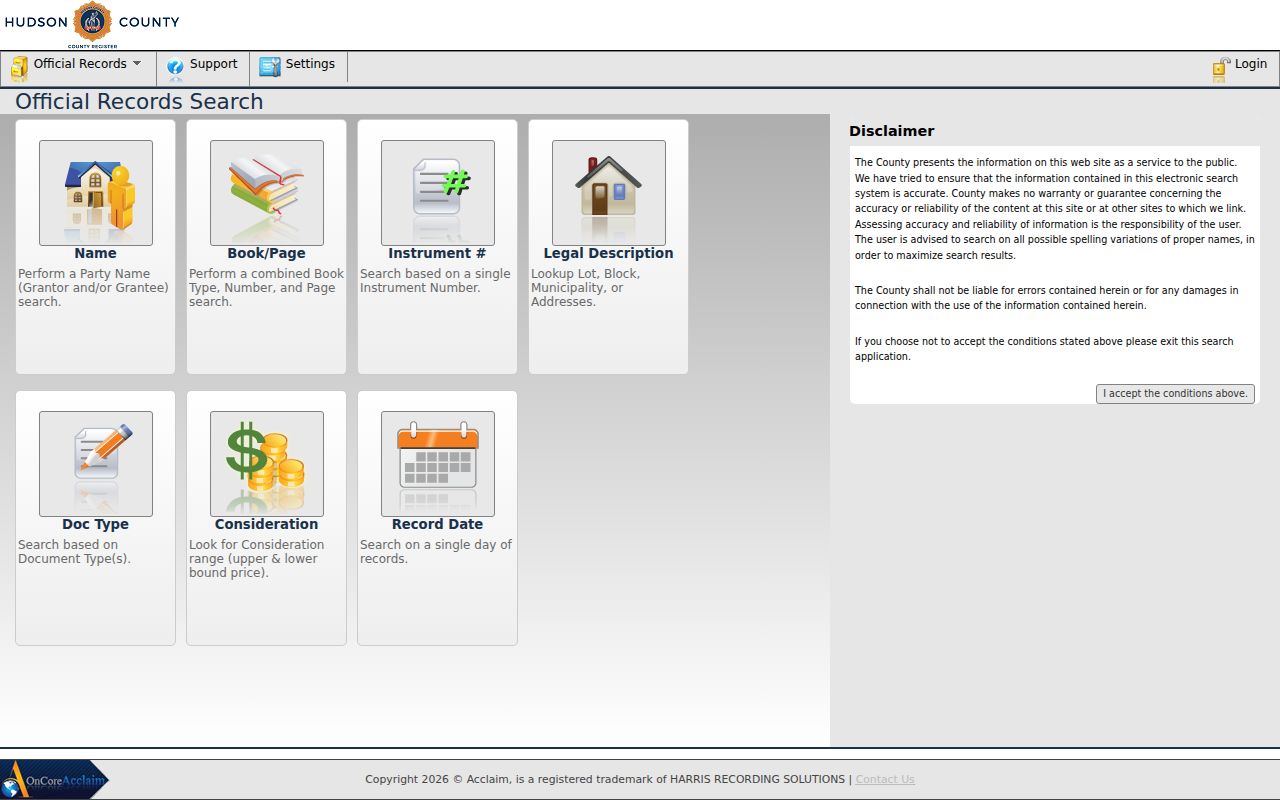
Treat an instrument as evidence of a recorded transaction, never as automatic proof of occupancy. A mortgage, discharge, lien, map, or easement serves a different legal purpose than a deed. If the web search comes up empty, ask the Register about the computer or hard-copy index using the municipality, block, lot, party variants, and an approximate record date.
- Grantor
- The party transferring or conveying an interest in an instrument.
- Grantee
- The party receiving that interest, who may be a person, estate, or organization.
- Legal description
- The lot, block, municipality, or other formal parcel description used to identify land beyond a street label.
Kearny Recording Alerts and Copies
Deeds, mortgages, liens, easements, maps, and discharges are all recorded for Kearny properties. The responsible office is the Hudson County Register. The office sits at 257 Cornelison Avenue in Jersey City, on the second floor. Weekday daytime hours are listed for search and cashier service. Customer-service phone hours are posted separately. Confirm both before making the trip. Recording and copy-fee schedules are linked by the Register too. Have an instrument number or a book and page ready before requesting any copy of a recorded document.
The Hudson County Register lays out the office route. It also covers its public record services for anyone tracing a Kearny deed or parcel.
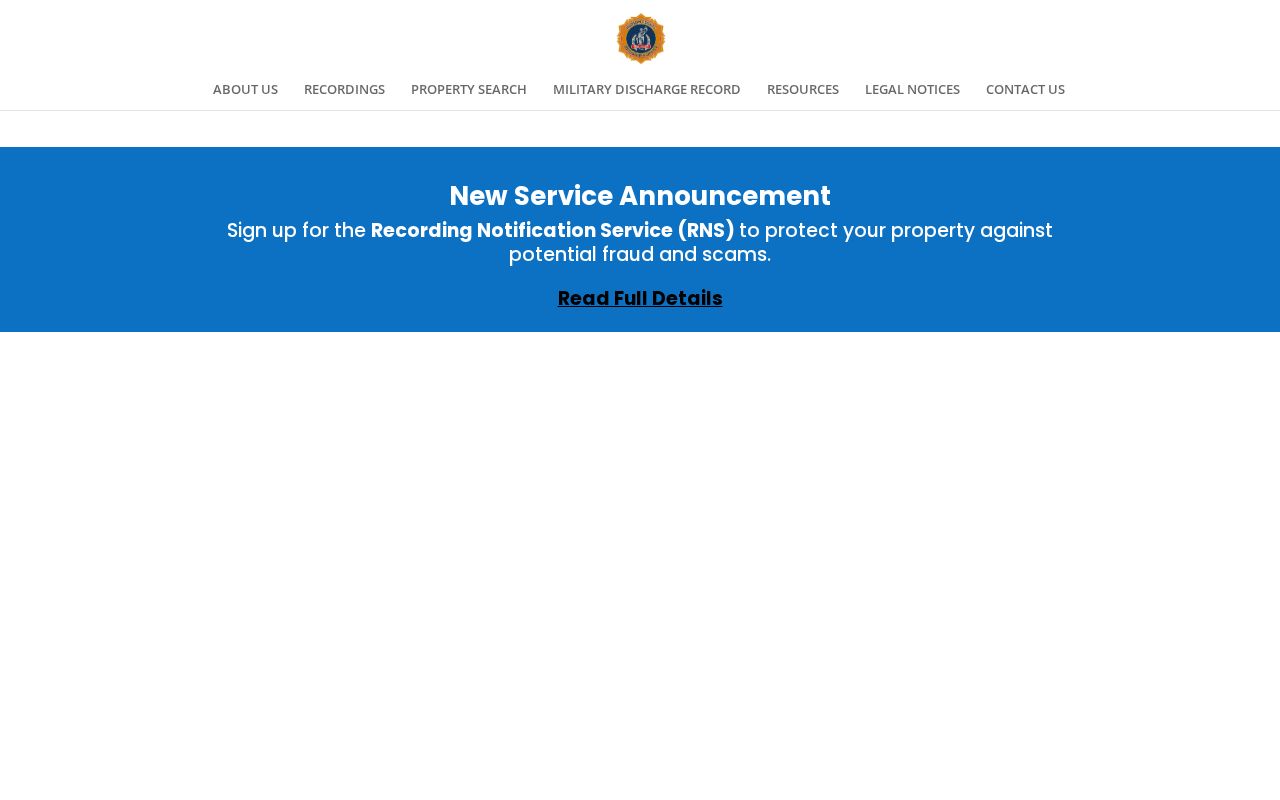
The Register offers a free Recording Notification Service. It can watch up to ten properties or names per email, using a name, address, lot, block, and municipality. An alert is not a title opinion. It also cannot replace a full historical search of the property rolls. If a notice or paid mailer ever looks suspicious, verify the document through the Register itself. Do not trust contact details printed on the mailer.
Current Kearny Resident Sources
Current residency in Kearny has no single master list. Instead, a resident lookup draws on purpose-built records, each with its own scope and date. The assessment roll links a parcel to tax administration. A mailing address often rides along with the parcel record, though its purpose is tax administration rather than proof of residency. The Register's index names recorded deed parties. New Jersey's voter tool answers one narrow registration question. A broader voter file sits behind legal controls and protected-address redactions, and state business or professional-license systems can confirm a filing or a credential without ever establishing a private home address.
| Kearny record source | What it can establish | Custodian | Documented route |
|---|---|---|---|
| Assessment card and tax map | Parcel, situs, assessment association, possible mailing record | Kearny Assessor | Office, phone, or focused request |
| Registration-status lookup | Limited current registration status using exact-name handling | NJ elections | Official status portal |
| Recorded-instrument index | Parties, document type, dates, legal description | Hudson County Register | Acclaim plus hard-copy fallback |
| Business or license record | State filing or displayed current credential | NJ Revenue or licensing board | Official state search |
| Community organization listing | Public institution and meeting-place context | Town of Kearny | Official organizations page |
Use the Kearny resident lookup route for one-person corroboration. Compare the person's name, date, record role, and official source, and remember that a business principal, license holder, or deed party still needs independent and lawful support before any current-residency claim. No record role alone proves residency.
Kearny Voter Status Is Limited
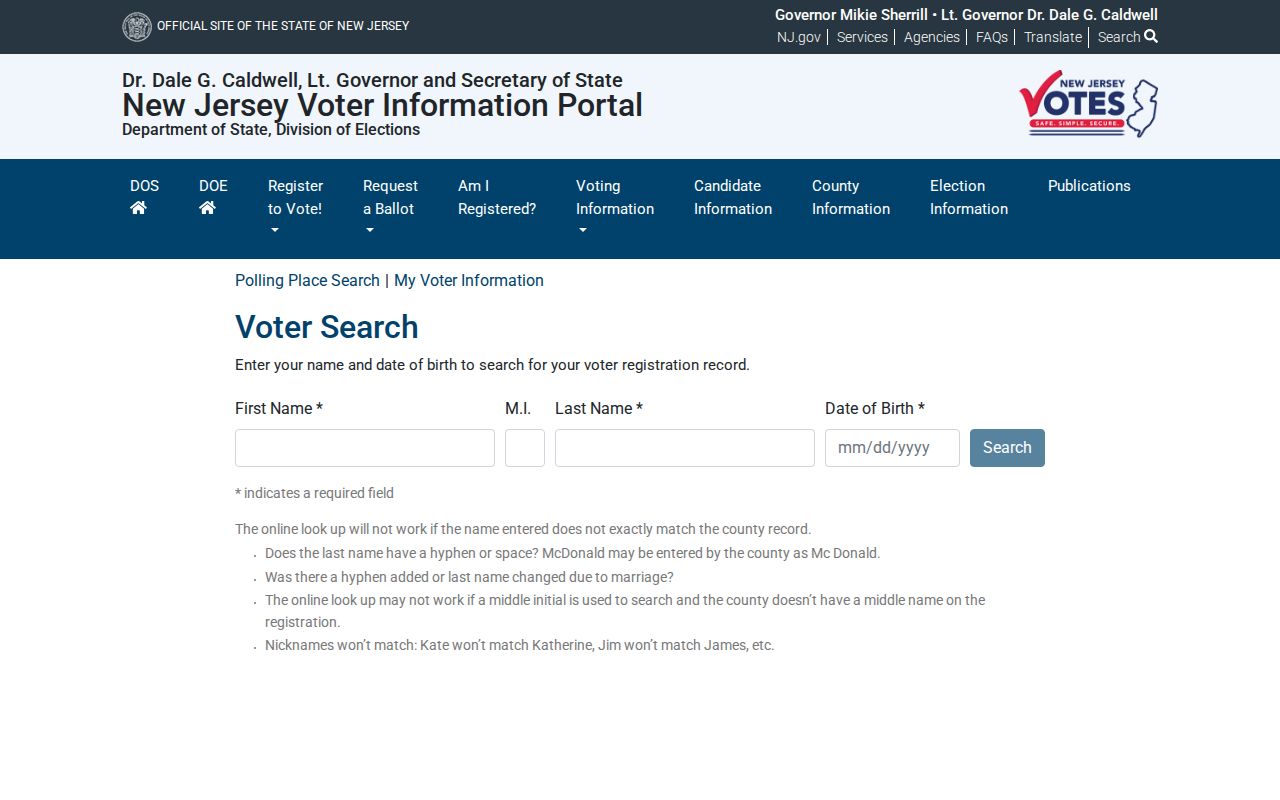
New Jersey's voter registration status search answers exactly one question. It reports a registration status and nothing else. Type the name exactly as county records show it. Then try hyphen, space, and middle-initial variations. Do not assume two similar names are the same person. A status result is not a household list. An inactive flag is not proof that someone left Kearny. The State describes an inactive record as potentially tied to an address question. That includes ballot mail returned as undeliverable or marked moved.
Use the tool for its narrow purpose. New Jersey's voter status route is the official starting point for that limited check.
A broader voter-file request goes to the right county custodian. It stays subject to use rules, redactions, and protected-person exceptions. Kearny's Town Clerk links to registration, polling-place details, results, and sample ballots. Those cover the town's wards. Ballots show election context, not a street's residents.
Kearny Court and Vital Checks
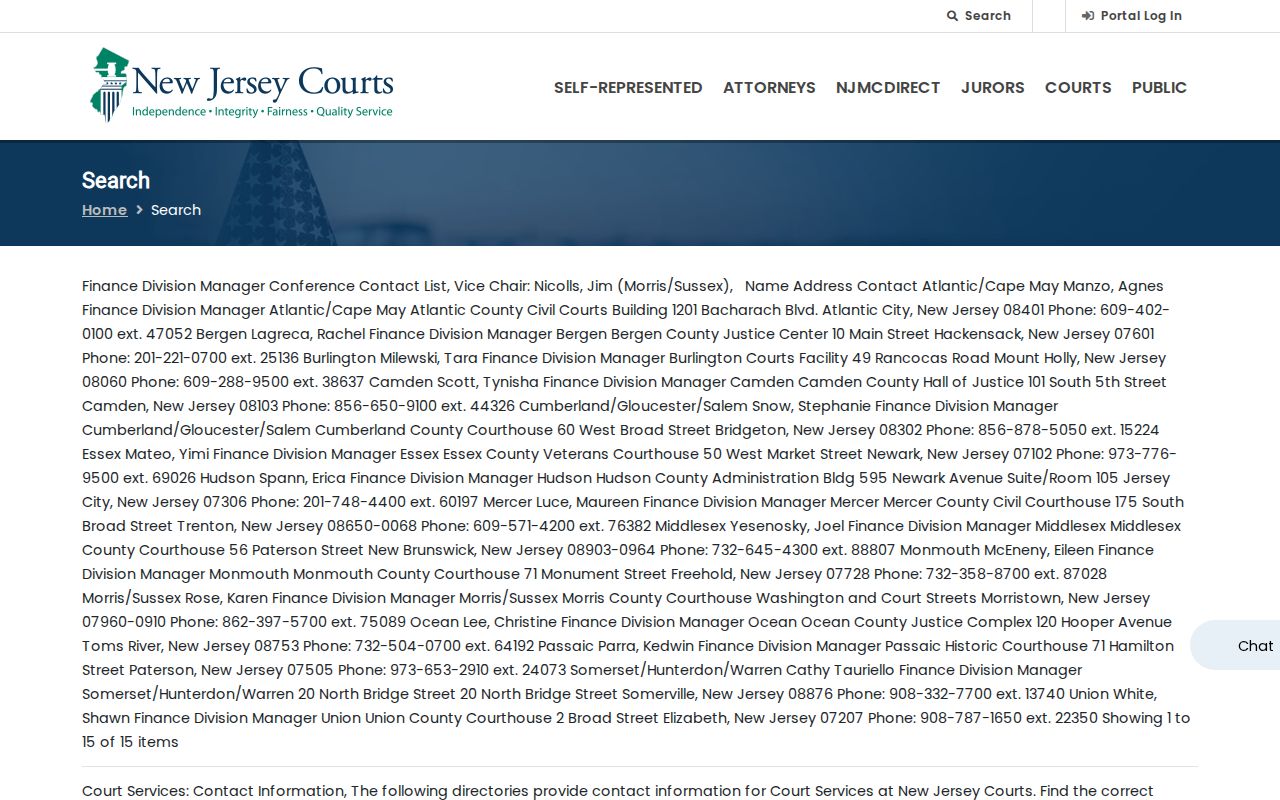
Courts and vital records answer different questions in a Kearny residents directory search, and New Jersey Courts separates civil and foreclosure jackets, criminal routes, judgments, Tax Court matters, and municipal cases. Each case family has its own access point. The Electronic Case Jacket party path wants an individual or business selection, a required first and last name, an optional middle initial, and a reCAPTCHA. One jacket can hold plenty. Expect a case summary and e-filed documents. Pre-eCourts paper, discovery, unuploaded material, and protected records may be absent, so a missing document is a reason to ask the court clerk rather than proof an event never occurred.
Pick the right route first. Start at the official search hub. New Jersey Courts search routes distinguish the case families and their access points.
Kearny vital events follow a separate custodial path. Neither the local registrar nor the New Jersey Department of Health offers an unrestricted public online name index. Certified and genealogical requests differ in eligibility, identity, fee, and age-threshold rules. Older series sit with the State Archives.
New Jersey Vital Statistics sets the request boundary.
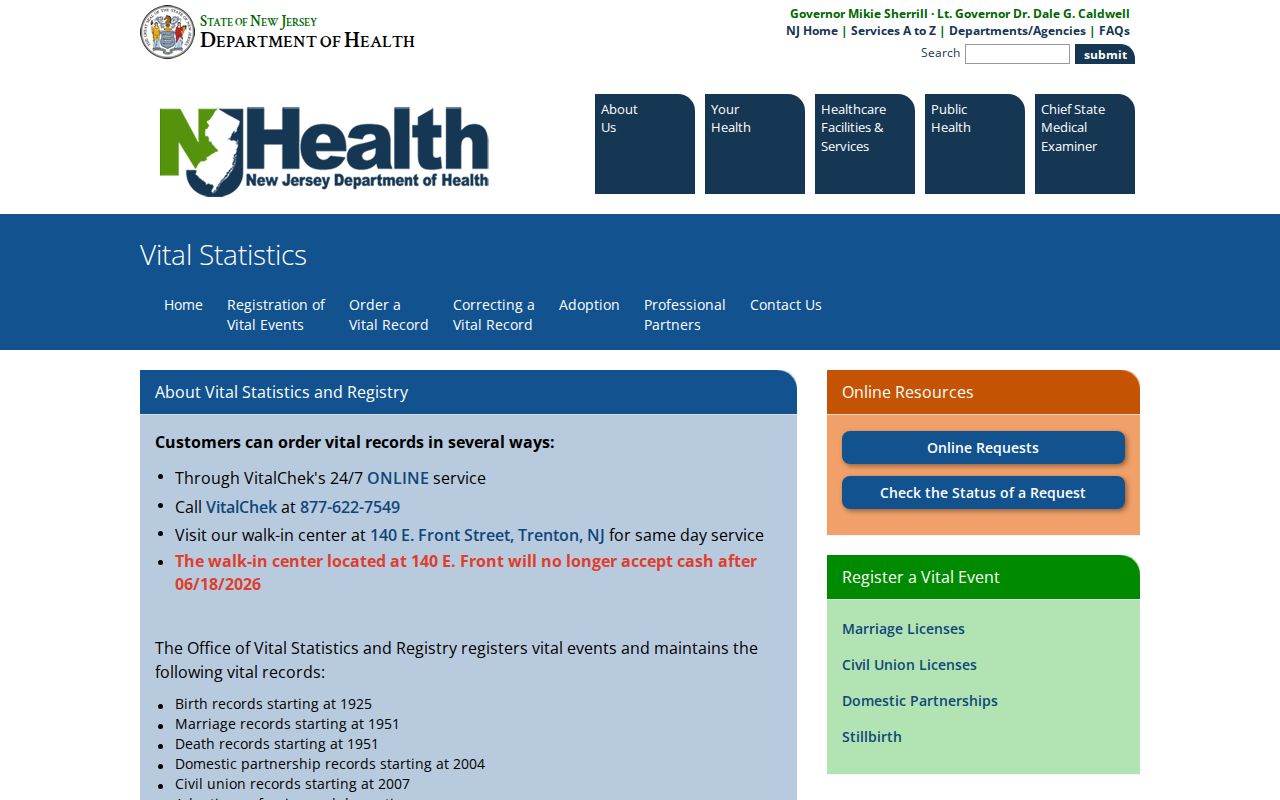
Use a birth, death, or marriage record only as the custodian allows. A vital record can confirm an event when eligibility permits. It is not a shortcut for finding living people.
Historical Kearny Resident Directories
The digitized directory archive at Kearny Public Library is the core historical residents directory source. Located runs span 1890 to 1929. The full set covers 1890, 1895, 1913, 1915, 1917, 1920, 1924, 1927, 1928, and 1929. Geographical labels shift across the collection. The 1890 run carries Harrison and Kearny sections; 1895 adds Arlington; 1913 through 1920 include East Newark; and 1924 through 1929 add North Arlington. Those labels describe each publication's scope, not modern boundaries.
Pair the Street Guide with the alphabetical sections. The 1890 archive navigation includes a Kearny Section and Street Guide. The 1913 navigation offers a Street Directory, two directory parts, a business directory, appendices, and introductory material. The catalog page names no publisher. Transcribe only fields visible in a scanned volume. The full year-by-year collection work belongs in the Kearny city directories.
Kearny Genealogy Record Thresholds
Vital records serve a past Kearny family better than a current search. Genealogy rules differ by event type. New Jersey sets different age thresholds for births, marriages, and deaths, and the subject must meet the stated deceased-person and series limits. The local Kearny registrar handles local requests. The State Archives holds the older vital series. Requesters should give the event type, subject's name, Kearny or Hudson County location, and year, then follow the custodian's identity and relationship rules. A genealogical copy is a research record. It is not a certified copy. New Jersey's genealogical vital-record guidance sets out the record-specific request path.
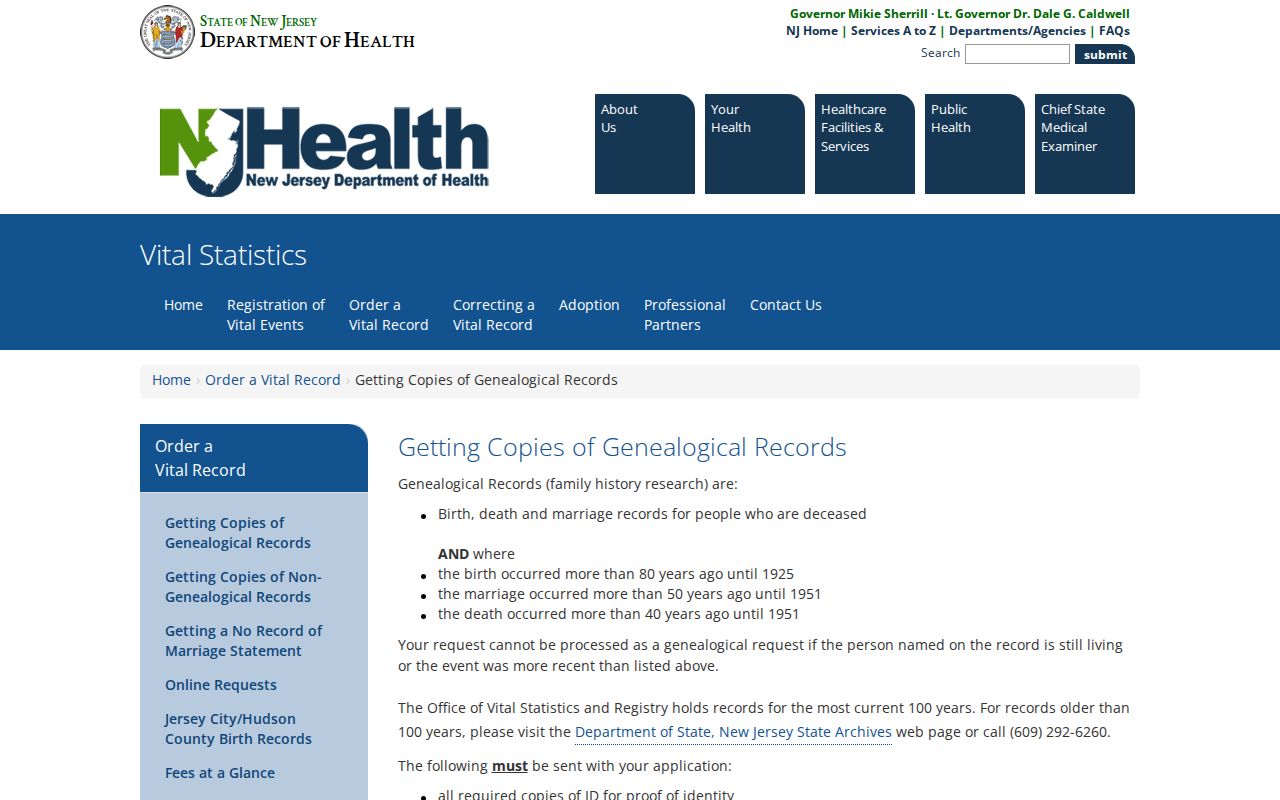
The State Archives holds births from 1848 through 1925 and marriages and deaths from 1848 through 1950 in its historical collections. Earlier Kearny-area work needs the right county context. Hudson County was formed from Bergen County in 1840.
Kearny OPRA Records Requests
Not every Kearny record sits in an online index. New Jersey gives residents a documented fallback. The Open Public Records Act, N.J.S.A. 47:1A-1 et seq., sets the request route. Write to the office that actually holds the record you want. A property card belongs with the Assessor. An instrument goes to the Register. The Town Clerk handles municipal forms, minutes, and license questions.
Identify the address or name, the record type, the date range, and your preferred delivery method. A blanket request for every record about a person is less useful, and it may not point to a proper government record at all. New Jersey's OPRA request guidance explains how to route a request to the appropriate custodian.
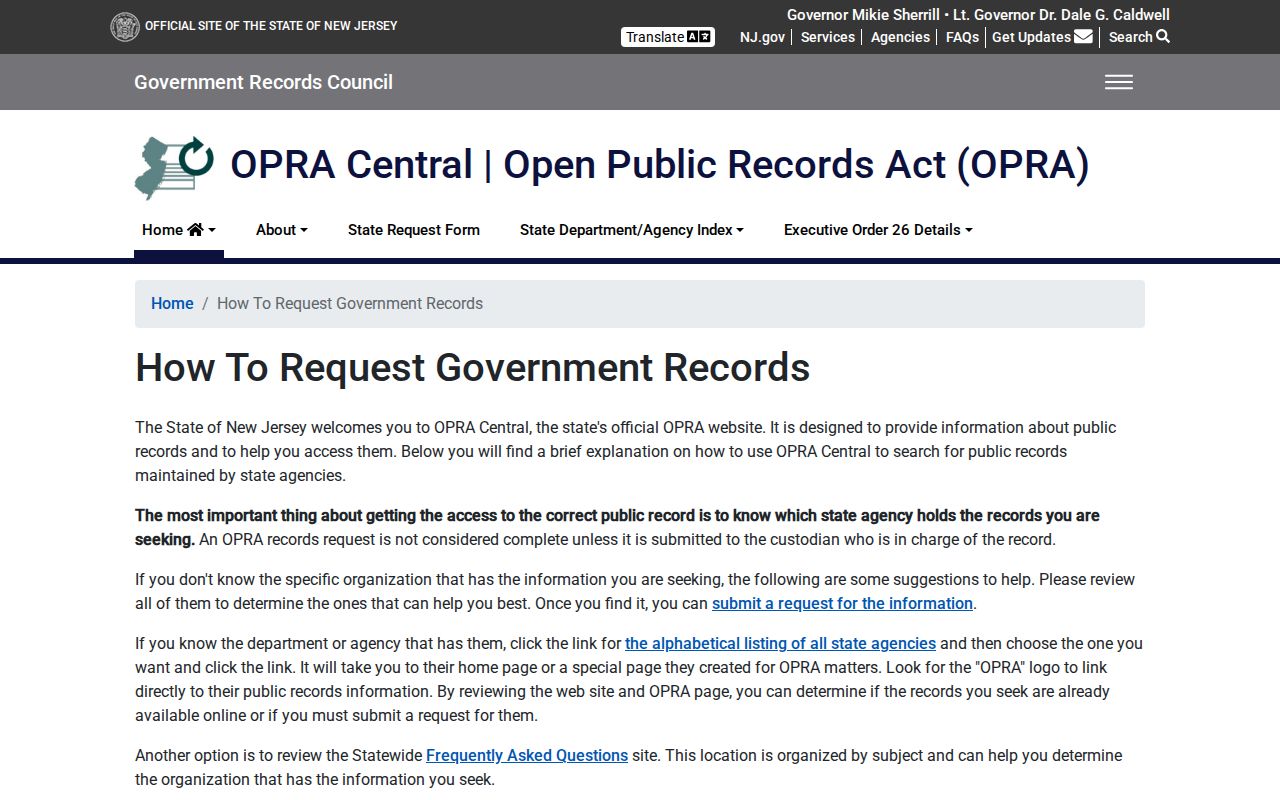
The Act allows a general seven-business-day response period. Exemptions and special review periods can still affect access. The statute sets per-page copy rates, though some requests also involve delivery or material charges. Confirm current fees and instructions before sending any payment.
Kearny Resident Privacy Boundaries
Public availability has limits. New Jersey's Address Confidentiality Program gives eligible participants a substitute address. Daniel's Law can redact covered people's home addresses from parcel, voter, and related government datasets. Courts can withhold sealed, expunged, juvenile, family, or non-electronic material, and vital records require eligibility. Motor-vehicle data is separately restricted. Do not treat a missing address or redacted owner field as an invitation to reconstruct it. Do not rebuild that detail from other records.
Lawful personal use. Kearny records are best used for family history, property research, civic questions, and other lawful personal purposes. Never use information from a record to stalk, harass, intimidate, or harm anyone.
Official sources can also help you avoid scams. The Register's free recording alerts and the State's free unclaimed-property search are safer starting points than an unsolicited payment demand. Preserve any questionable notice. Then verify it through the official agency domain and report deceptive demands to the proper government or consumer-protection channel.